
Amid uncertainties arising out of the second wave of COVID-19, the Reserve Bank on Thursday said that a durable revival of private consumption and investment would be critical for sustaining economic growth post-pandemic. Observing that 2020-21 has left a scar on the economy, RBI in its annual report said, "in the midst of the second wave as 2021-22 commences, pervasive despair is being lifted by cautious optimism built up by vaccination drives." The second wave of the pandemic has prompted revision of growth projections for the current fiscal and the consensus appears to be gravitating towards RBI's forecast of 10.5 per cent, the report added.

Faulting previous governments for not taking adequate measures to economically empower women in the country, Prime Minister Narendra Modi on Thursday said his government was constantly creating an environment in which women self-help groups can connect villages with prosperity as he released Rs 1,625 crore as capitalisation support fund to over four lakh such groups. In a virtual interaction with the women self-help groups (SHGs) under the "Aatmanirbhar Narishakti se Samvad" (dialogue with self-reliant women) initiative, Modi said in a changing India, opportunities are increasing for women to move forward. The movement of woman SHGs has intensified in the last 6-7 years with over 70 lakh of them working across the country, a figure over three times more than earlier, he said, adding over eight crore women are connected with these groups.

Publicly traded banks in India added Rs 1 trillion in bad loans for the quarter ending December 31, 2015.
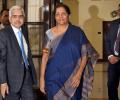
The focus of the meeting will be on enabling businesses and households to avail of the revival framework on the basis of viability, necessary steps like finalising bank policies and identifying borrowers, and discussing issues that require addressing for smooth and speedy implementation.
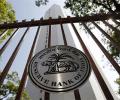
At least five state-run banks on central bank's radar for lax credit appraisal

Despite all of the PM's many strengths, it is increasingly clear that he does not necessarily have a coherent and clear worldview on matters of macro policy.

'Sectors that had been left out till now will also start participating in the rally.'

The recapitalisation, the finance minister said, will enhance the lending capacity of state-owned banks and help them come out of RBI's Prompt Corrective Action framework.

Speaking during the Question Hour, the road transport and highways minister said the country has set several world records in road construction despite COVID-19. The construction of Zoji La tunnel on the Srinagar-Leh highway will be completed before 2024, while another Z-Morh tunnel will be completed in the next three months, he added.
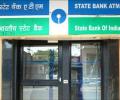
Higher provisioning drags net profit down by 7.8 per cent.

'I have been most pained at being painted as an absconder'.

'We are at $2.7 trillion and 2024 is not far away.' 'The country will need to grow by 9% every year for 5 years continuously and raise the aggregate investment rate to 38% of GDP to achieve the government's target of turning India into a $5 trillion economy.' 'Given the fact that we are only growing at about 5% and our investment rates are only about 30%, it may take a number of years before we can reach that targeted level.'

The banking sector is set to move at a fast pace from hereon.
The report said resilience of the banks has increased with a sharp improvement in the provision coverage ratio to 60.6 per cent in March 2019 from 52.4 per cent in September 2018 and 48.3 per cent in March 2018.

In an affidavit filed by Union finance ministry on behalf of the Union of India, it said that the relief to all borrowers in respect of compounding of interest during the period of moratorium would be admissible to the categories specified irrespective of whether the borrowers had availed the moratorium or not.

67 companies with total debt of Rs 5.65 lakh cr were either loss-making or didn't generate enough profit to cover interest cost in FY15

Rating agency ICRA on Wednesday revised down its credit growth outlook for banks to 2-3 per cent for the current fiscal, and said the coronavirus pandemic-driven stress may leave 3.1-3.7 per cent of assets into bad loan list by March.

Punjab National Bank has made a name for itself in recovery of bad loan dues. Usha Ananthasubramanian, managing director and chief executive officer of the government-owned lender, explains how it has achieved this reputation.

Embattled retailer Future Retail Ltd (FRL) on Tuesday moved the Supreme Court to avert insolvency proceedings over missing a loan repayment deadline, even as its independent directors rejected an Amazon-supported offer to sell the company businesses at less than a third of what Mukesh Ambani's Reliance is offering. India's second-largest retailer, which operates multi-brand retail chains such as Big Bazaar, Easyday and Heritage, failed to pay Rs 3,494.56 crore to lenders by the due date of December-end and sought a 30-day grace period to resolve the situation. Unable to find money, it moved the apex court seeking to restrain its lenders from declaring the company a defaulter, which can invite initiation of insolvency proceedings.
With the above relaxation, more than 70 per cent of the depositors of the bank will be able to withdraw their entire account balance, the central bank said as most of its account holders have an average balance of just about Rs 10,000.

Standalone total income increased to Rs 74,457.86 crore in the first quarter of 2020-21, from Rs 70,653.23 crore in the same period a year ago.

India's five leading wilful defaulters are Winsome Diamonds & Jewellery Ltd and associate Forever Precious Jewellery & Diamonds, Zoom Developers, Kingfisher Airlines, Beta Naphthol and Raza Textiles

The central probe agency that began action against the banker by raiding his upscale residence in south Mumbai on Friday is primarily investigating Kapoor, his wife and three daughters over a Rs 600 crore fund received by a firm allegedly "controlled" by them from an entity linked to the scam-hit Dewan Housing Finance Limited.

Its total income (consolidated) rose to Rs 79,302.72 crore in the quarter under review, compared to Rs 74,948.51 crore in the year-ago period

Every employee on an average contributed Rs 650,000 to the bank's profit in the last fiscal.
Bankruptcy proceedings are going at a slower pace than what the bankers had envisaged and many cases have gone beyond the 270-day timeline set under the IBC mainly because of litigation.
Software firm dismisses charge, says Finacle has proven ability.

Observing that the economic recovery was not yet fully entrenched, the RBI Governor said recovery is likely to be gradual.

Banks have collected about 1,500 kg of gold from temples and trusts under the Gold Monetisation Scheme (GMS) since its launch last November.

Future Retail's independent directors had last week asked Amazon if it was willing to give a long-term loan to avoid default on repayment of Rs 3,500 crore loan due on January 29. Amazon replied to that saying it was willing to financially assist Future Retail through the Samara Capital deal but the retailer must shelve Rs 24,713 crore deal with the Reliance group.

The bank's gross non-performing assets rose to 10.69 per cent of total advances at the end of June, against 9.97 per cent a year ago.

Axis Bank was the top laggard in the Sensex pack, plunging more than 5 per cent, followed by HDFC, Bajaj Finance, ICICI Bank, Tata Steel, Bajaj Auto, HDFC Bank and IndusInd Bank. On the other hand, M&M, Infosys, Asian Paints, UltraTech Cement and Tech Mahindra were among the gainers.

IMF's Chief Economist Gita Gopinath on Thursday said it would be damaging for India to start tightening policy support in the midst of the COVID-19 pandemic and also stressed on reducing wasteful expenditures in the upcoming Budget. Delivering NCAER's '9th C D Deshmukh Lecture' virtually, Gopinath said there is scope for the Indian government to provide more direct support to people.

'Companies with a strong business case and healthy balance-sheet should sail through and emerge more robust in the future.'

The upcoming July derivatives expiry later in the week would also add some volatility to the market proceedings.
If warranted they can initiate criminal proceedings including filing of FIR, a Finance Ministry official said.

The finance ministry official may have claimed that the ministry does not have information on the loans sanctioned by different banks to Mallya or the details of the guarantee given by Mallya against those loans, but the ministry had responded to questions in this regard in Parliament in the past.

'It is going to be a buyers' market and you will get a good number of companies at reasonable valuations and that's when one has to be very greedy.'
Reserve Bank has almost finalised the structure of Central Fraud Registry.

The Indian economy was on an impressive growth path through the first decade of this century till it was brought to an abrupt halt by the policy inertia during UPA2 and the Modi government's inability to restore economic and financial momentum. Fascinating glimpses of what went wrong from Puja Mehra's must-read book The Lost Decade: How India's Growth Story Devolved Into Growth Without A Story.
 © 2026 Rediff.com - Advertise with us - Disclaimer - Privacy Policy - Sitemap - Feedback - About us - Terms of use - Grievances